
Save management time
Use connected platform data instead of repeatedly pulling together separate spreadsheets and reports for routine operational questions.
Why connected reporting matters
The benefit of reporting is not another dashboard. It is faster, more consistent decision-making: seeing where revenue is coming from, where capacity is being lost and which operational changes deserve attention.
Use connected platform data instead of repeatedly pulling together separate spreadsheets and reports for routine operational questions.
Move from a headline KPI into the appointments, services or transactions behind it rather than relying on a number without context.
Track rebooking, retention, diary use, retail, stock and team measures so changes are easier to identify before they become bigger problems.
Use the same reporting structure across people, periods and locations to make comparisons more meaningful.
Turn broad performance discussions into specific measures and actions that can be reviewed again.
Multi-location reporting can provide group-level oversight while preserving useful operational detail for individual sites.
Reporting and analytics
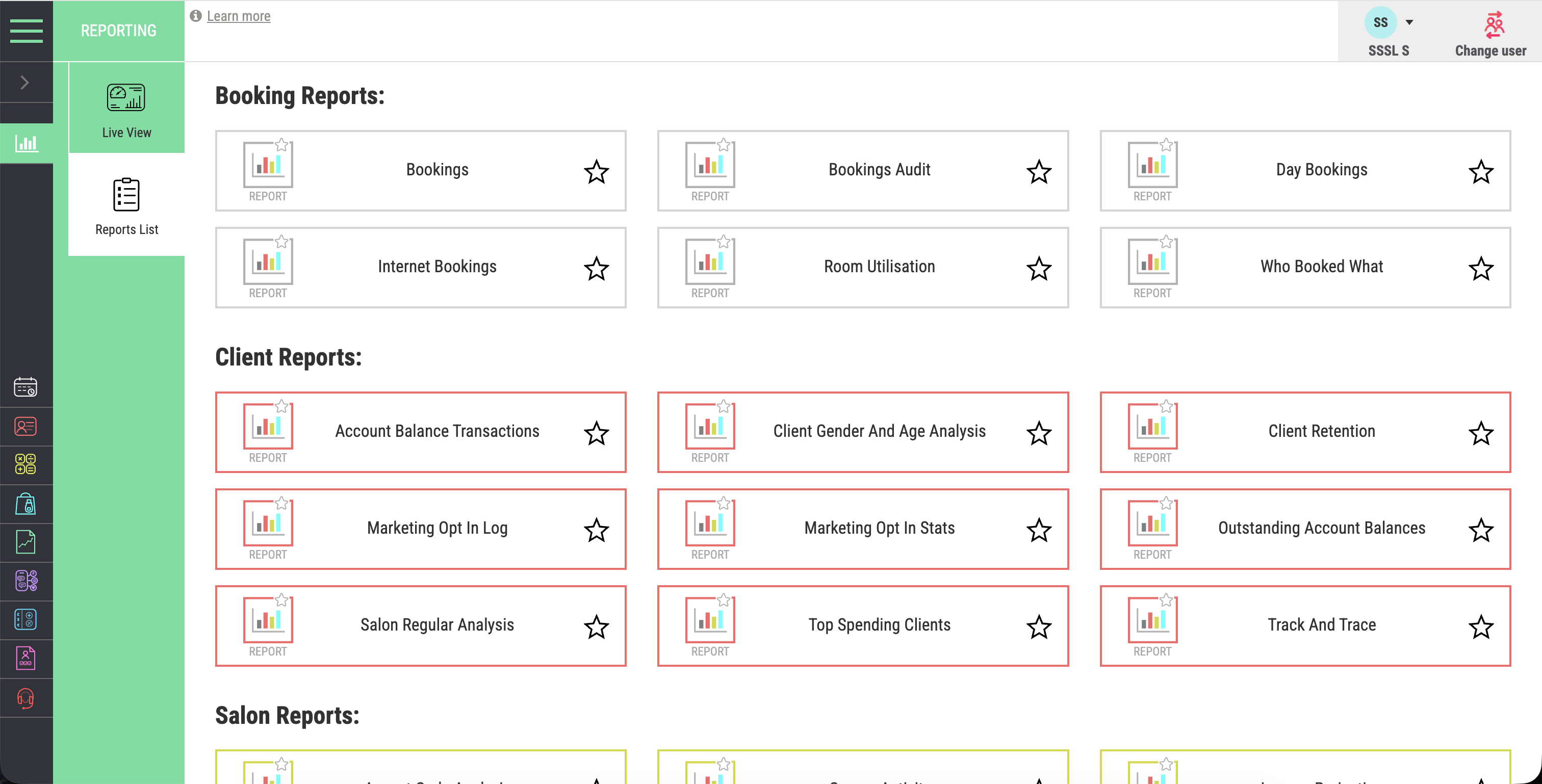
Use dashboards for an immediate view, then open, customise, favourite and export the reports that matter to your business.
See current performance quickly, then move into the detailed report behind each measure.
Mark regularly used reports as favourites so the team can return to them faster.
Adjust supported filters, time periods, locations and report options around the question you need to answer.
Export reports for further analysis, sharing or a clean saved record.
Calculate commission from connected service and retail sales information.
Give each team member a clear view of the measures and progress relevant to them.
Set and monitor targets for the complete business and individual team members.
Review booking patterns, rebooking, returning clients and longer-term retention.
Connect service revenue, retail performance and stock information in the wider business view.
At a glance
Because the reporting uses data from the same diary, CRM, POS and stock system, managers can investigate changes without merging separate spreadsheets. Clearer measures support decisions about capacity, pricing, retail and client retention.
How it works
Choose the measures that matter, review them consistently and turn the information into a practical action.
Decide whether you need to understand revenue, bookings, staff, clients, stock or another business area.
Use the appropriate date range, location and filters so the comparison is meaningful.
Make a specific operational decision, then review the same measure to understand the effect.
Questions buyers ask


